1973Audi100LS
-
Posts
53 -
Joined
-
Last visited
Content Type
Profiles
Forums
Events
Gallery
Everything posted by 1973Audi100LS
-
Μπράβο Πάνο!
-
Η γνώμη μου είναι τις ζώνες ασφαλείας να μην τις βγάλεις. Όχι μόνο γιατί είναι υποχρεωτικές και σήμερα που το κυκλοφορείς, αλλά και επειδή είναι μία παρέκκλιση από το αυθεντικό που είναι απαραίτητη για λόγους ασφάλειας. Κανείς δεν πρόκειται να σου πει ότι το αυτοκίητο δεν είναι 100% αυθεντικό γιατί έχει ζώνες! Άλλωστε μπορεί να μην ήταν υποχρεωτικές το 1966 αλλά τουλάχιστον αν δεν είναι αυτόματες υπήρχαν στην αγορά και μπορούσες να τις βάλεις στο αυτοκίνητό σου και τότε. Ίσως όχι στην Ελλάδα αλλά στο εξωτερικό οπωσδήποτε υπήρχσν.
-
Πάνο συγχαρητήρια, πολύ ωραίο το αποτέλεσμα! Εντυπωσιάστηκα! Θα ήθελα να το δω από κοντά με την πρώτη ευκαιρία. Νίκος
-
Πάνο, θα ενδιέφεραν πιστεύω να βάλεις φωτογραφίες των σημείων που έγινε φανοποιία. Εξωτερικό βάψιμο έκανες; Επίσης επειδή βλέπω ότι έχεις πρόβλημα με σκουπίδια-σκουριές στο τεπόζιτο βενζίνης θα σου πρότεινα να ψάξεις την περίπτωση καθαρισμού και εσωτερικής πλαστικοποίησης (υπάρχουν κάποιοι που το κάνουν αν και αρκετά ακριβοί) ή αντικατάστασής του αν υπάρχει περίπτωση να βρεις καινούριο. Φοβάμαι ότι τα προβλήματα με τα σκουπίδια δεν θα σταματήσουν εύκολα....
-
Ωπ! Βλέπω ότι έχεις μπει στη φάση της σημαντικής ταμειακής εκροής! Για δώσε περισσότερες λεπτομέρειες/φωτογραφίες....
-
Είσαι μια χαρά! Άψογος! Αυτή η κατηγοριοποίηση είναι ενδεικτική της κατάστασης του αυτοκινήτου και δύσκολα αλλάζει (εκτός αν χειροτερέψει). Πχ. αν ένα αυτοκίνητο βαφεί δεν μπορεί να γίνει Α1, που είναι η τοπ κατηγοριοποίηση (σχεδόν σαν καινούριο χωρίς να έχει γίνει τίποτε πανω του), αλλά δύσκολα χαρακτηρίζεται και Α2 (μόνο μικροεπεμβάσεις).....
-
Καλά τα λες! Πολύ καλά! Δεδομένου βέβαια ότι δεν το έχεις βάψει θα μπορούσε να είναι και Α2!
-
Πάνο σε τι κατηγορία σου έβγαλαν την κάρτα FIVA;
-
Nαι, ναι!!! άντε να εμπλουτίσεις την παρέα !!!!
-
Πάνο ελπίζω ό,τι δεν σου χαλάω το θέμα..... Ένα όμορφο και απολύτως αξιόμαχο Auto Union DKW F12 του 1963 στο Απολλώνιο regularity rally την περασμένη Κυριακή:
-
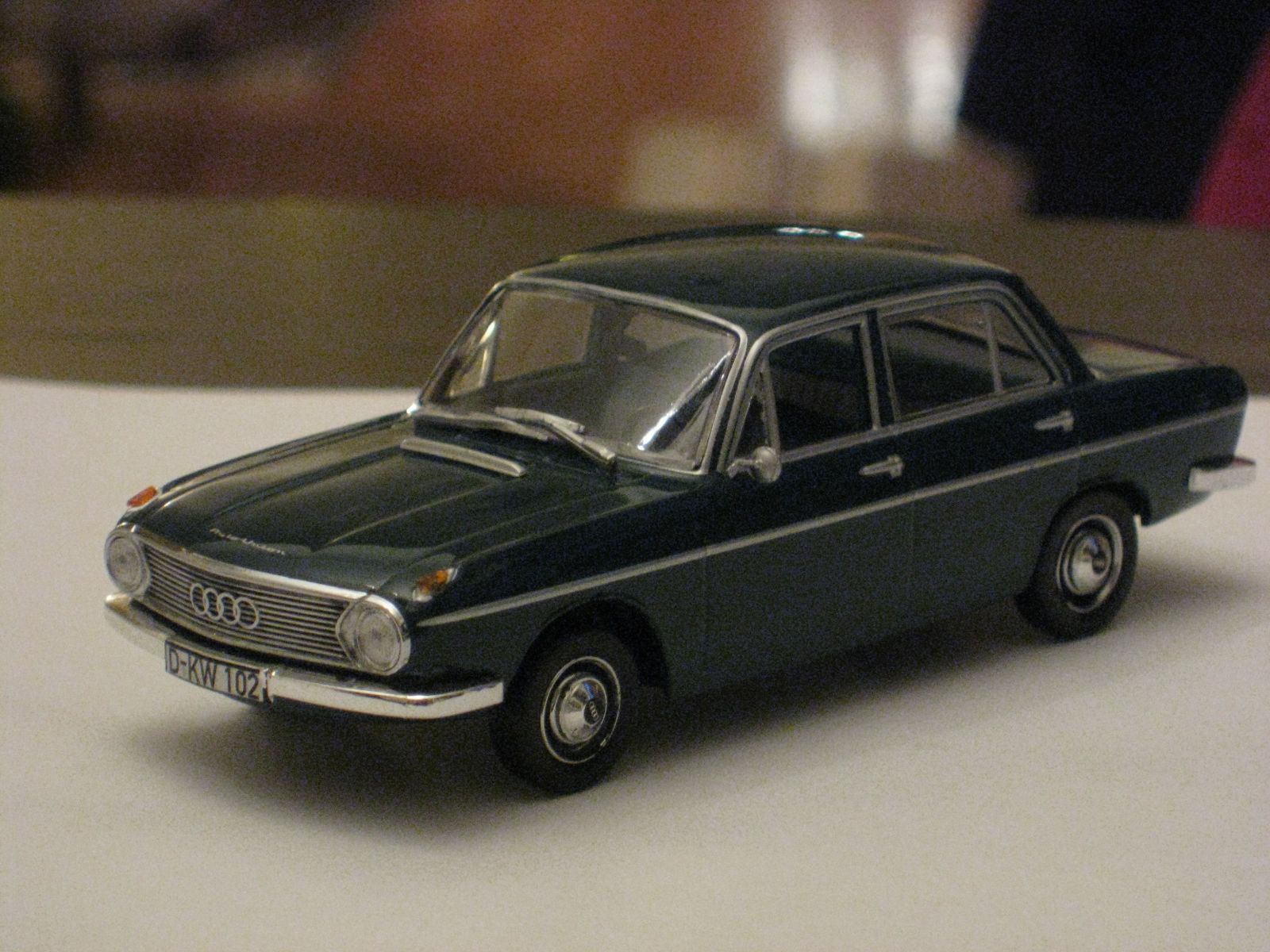
Αν και φοβάμαι ότι είμαστε off topic, μιας και συζητήθηκε το θέμα με τα μοντέλα, όποιος ενδιαφέρεται να ενημερωθεί ας ρίξει μία ματιά στο e-shop που έβαλα, το οποίο έχει την μεγαλύτερη database μοντέλων που γνωρίζω (μαρκάροντας την επιλογή encyclopedia) . Η Minichamps, όπως λες Μιχάλη έχει όλα τα σύγχρονα μοντέλα σε κλίμακα 1/43 (όπως αυτά της Norev), αρκετά ακόμη και σε κλίμακα 1/18 που είναι πολύ εντυπωσιακά. Επίσης έχει και αρκετά από τα ιστορικά της μοντέλα. Επίσης υπάρχει το 100 Coupe S σε 1/18 από την Anson και το Quattro σε 1/43 από την Solido και την Norev. Να μερικά από τη συλλογή μου :
-
Δες τι έχω γράψει στα προηγούμενα ποστς
-
το e-shop είναι αυτό: http://www.carmodel.net/ Δεν σε συμφέρει όμως να πάρεις λίγα μοντέλα γιατί με τα 12,5 ευρώ που χρεώνει έρχονται πολύ ακριβά. Ο Carlo δεν είναι φτηνότερος από τους Έλληνες, απλώς έχει μεγαλύτερη ποικιλία και τα φέρνει νωρίτερα. Εγώ παίρνω 7-8 μοντέλα που είναι το όριο βάρους για τα 12,5 ευρώ για να επιμερίσω το κόστος. Ίσως καλύτερα να τα ψάξεις στην Ελλάδα προς το τέλος Φεβρουαρίου ή στο ebay, όπου όμως δεν βγαίνουν φτηνά. Η NOREV έχει βγάλει κάμποσα πρώϊμα μοντέλα της "οικογένειας" Audi τελευταία: Εκτός από το DKW F102, έχει και το DKW 3=6 του 1958 και το Auto Union 1000S που είναι το ίδιο μοντέλο με το σήμα της Auto Union στη μάσκα, το Audi 72, το πρώτο Audi που βγήκε το 1965 και το VW Κ70, που ήταν μοντέλο της NSU που το οικειοποιήθηκε η VW κατά την προσφιλή της συνήθεια! DKW 3=6 Auto Union 1000S AUDI 72 VW K70
-
Nα ζήσετε! Αυτά τα ωραία πράγματι προηγούνται! Το μοντελάκι είναι NOREV καινούρια φουρνιά. Το πήρα από ένα Ιταλικό e-shop, αλλά θα τα φέρουν κι εδώ σύντομα..
-
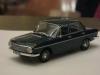
Πώς πάει η ανακατασκευή Πάνο; Εγώ πάντως το χτύπησα το μοντελάκι :
-
Από το μουσείο της Audi:
-
Πάνο μου κάνει εντύπωση που δεν βλέπω να έχεις στη λίστα σου γενική επισκευή μηχανής. Δεν χρειάζεται; Πάντως εάν πρόκειται να κάνεις σημαντικές μηχανικές εργασίες ίσως θα πρέπει να σκεφτείς αν θα τις κάνεις πριν ή μετά το βάψιμο. Εγώ το έβαψα πρώτα και το μετάνιωσα γιατί ο μηχανικός στη συνέχεια μου έκανε μία-δυό γρατσουνιές
-
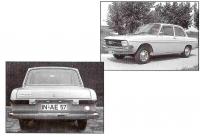
Αντιγράφω μέρος ένος άρθρου του David Wilkins στην "Independent" (15.2.05) με τίτλο: CLASSIC CARS DKW F102: origin of the species ............ In 1958, Daimler-Benz bought 87.8 per cent of Auto Union. It was later to sell the company to Volkswagen in two stages in 1965 and 1966 but Daimler- Benz's short period of ownership was decisive. Development effort was stepped up, bearing fruit with the introduction of the new DKW F102 in March 1964. The F102's styling was bang up-to-date and the car incorporated a number of advanced technical features such as inboard front disc brakes. But the F 102 was a new car that was initially available only with an old- fashioned engine - a three cylinder two-stroke unit, this time with a capacity of 1.2 litres. Sales suffered as a result. But Auto Union's departing owners, Daimler-Benz, had also funded the development of a new 1.7 litre four-stroke engine that would do a much more convincing job of shifting the F102 down the Autobahn; it had a notably high compression ratio (11.2 to 1) and displayed a distinctly sporty character. At the same time as this engine was introduced in September 1965, the frontal styling was updated, with the existing round headlamps being replaced by rectangular units. Internally, the modified car was known as the F103, but clearly, a way had to be found to communicate the fact that the F102 had seen some fundamental improvements. The obvious way to do that was with a new name; Audi, last used in 1939, was chosen. At first, there was some confusion; the car was initially known simply as `Audi', although as variants on the original 72 horsepower version were introduced, they were labelled Audi 60, Audi 80 and Audi 75, depending on power output. The top model was named Audi Super 90. Gradually, Audi became established as the company's brand, rather than as a model name, and all doubt was removed with the introduction of the new Audi 100 in 1969, which as its name suggested had a 100bhp engine - its styling was similar to that of the F 102, but stretched in length, so the effect was sleeker and sportier. The F102 was quietly dropped in 1966, and its Audi derivative continued until 1972.
-
Μπράβο Πάνο συγχαρητήρια για το project ανακατασκευής που ξεκίνησες! Άντε να αυξάνονται οι κλασσικοί..... Σχετικά με το χρώμα θα πρότεινα είτε το ίδιο που είναι τώρα είτε κάποιο αυθεντικό χρώμα από αυτά που κυκλοφορούσε το μοντέλο.....
-
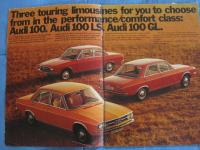
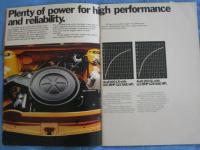
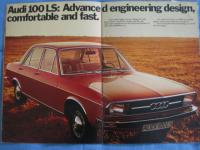
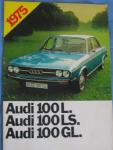
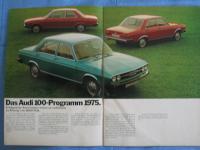
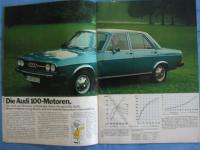
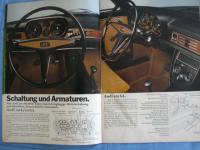
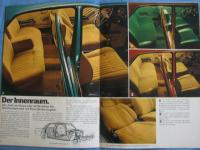
AUDI 100 1.6, 1.8 1974 Audi gave the 100 a new look in 1974, although the platform remained essentially as before. It gained a new 1.6 engine in 1974 with refinements such as optional power steering, servo brakes and diagonally linked dual braking circuits, and the 80's self-stabilising negative offset steering. The 1.6 litre engine was the overhead cam 63kW (85bhp) unit from the 80 GL. The four-speed gearbox, with the 4.111 final drive, was unchanged. Suspension remained basically unaltered too, although anti-roll bars became standard front and rear. Even with the smaller 1.6 litre engine, the 100 could accelerate to 100kph in 13.5sec, and reach close to 100mph. Yet the significant feature of Audis was the impression they created. In 1974 The Motor said, "..the feel of the car inspires confidence... the Audi range has matured steadily." BODY 2/4 door; 5 seats; weight 1050kg (23101b). ENGINE 4 cylinders, in line; front; 79.5x80.0mm, 1588cc; compr 8.2:1; 63kW (85bhp) @ 5800rpm; 39.7kW 11 (53.5bhp/l); 122Nm (12.4mkp) @ 3500rpm. ENGINE STRUCTURE Ohv; 2 valves per cylinder; 1 belt driven ohc; aluminium alloy cylinder head; cast iron block; 5 bearing crankshaft; Solex 32/35 DIDTA carburettor; water cooled. TRANSMISSION Front wheel drive; 4 speed gearbox; spiral bevel final drive, 4.111. CHASSIS DETAILS Steel unitary construction; independent front suspension, struts, coil springs; rear suspension, dead axle, trailing arms; Panhard rod, coil springs. Anti-roll bars front and rear; ventilated discs front, drum rear; dual braking circuits; vacuum servo power assistance; rack and pinion steering, optional PAS; 58.01 (12.8 Imp gal) (15.3 US gal) fuel tank; 155SR14 tyres, 5.0in rim width. DIMENSIONS Wheelbase 267.5cm (105.3in), front track 145.0cm (57.1in), rear track 142.5cm (5.61cm), ground clearance 19.5cm (7.7in), turning circle 11.2m (40.0ft), overall length 459.0cm (180.7in), overall width 173.0cm (68.1in), overall height 142.0cm (55.9in). PERFORMANCE for 1588cc 85bhp Maximum speed 99mph (160kph); 27.7kph (17.0mph) @ 1000rpm; acceleration 0-100kph (62mph) 13.5sec; 16.7kg/kW (12.4kg/bhp); average fuel consumption 31.7mpg (8.91/2100km). Source: The Audi File, by Eric Dymock, Dove Publishing
-
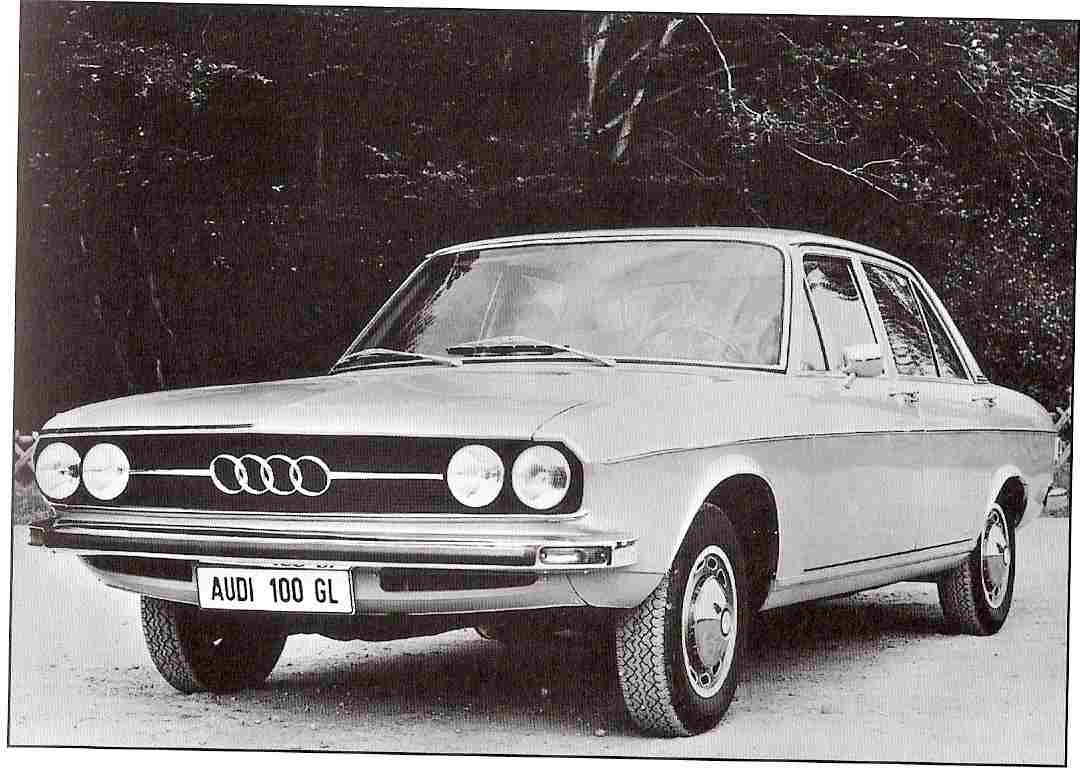
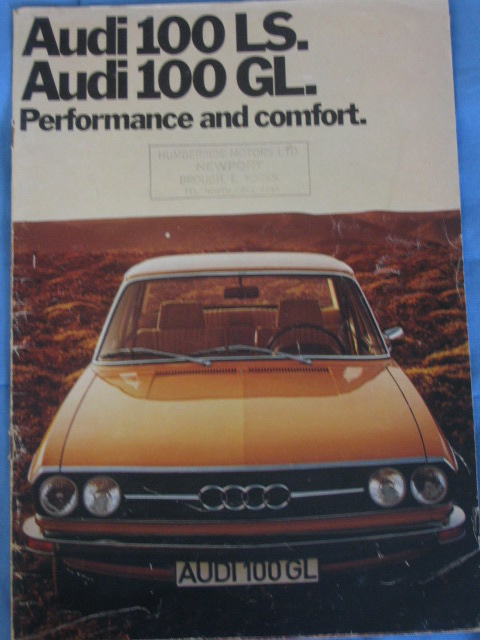
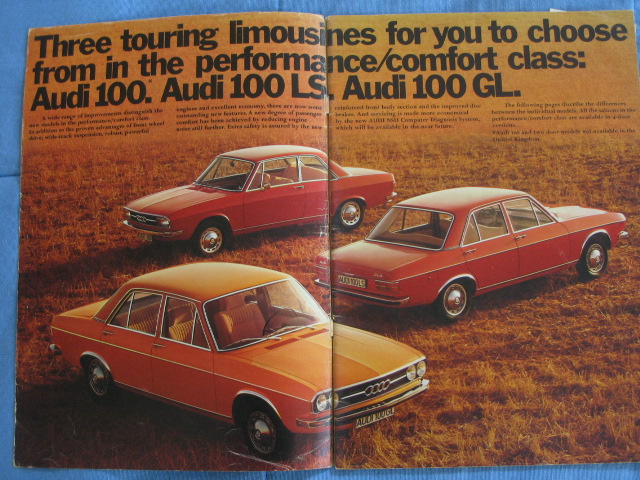
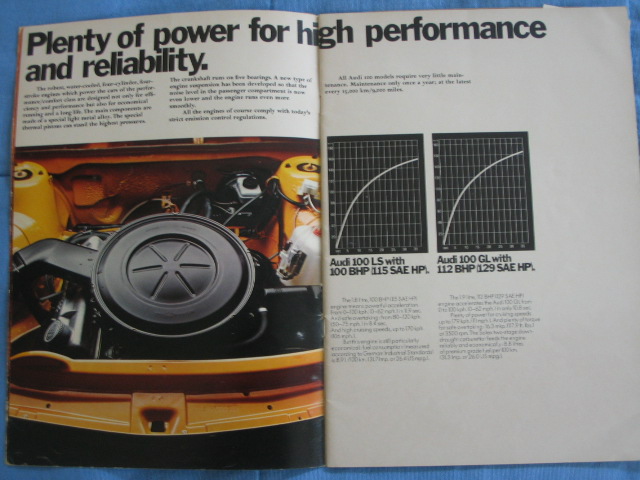
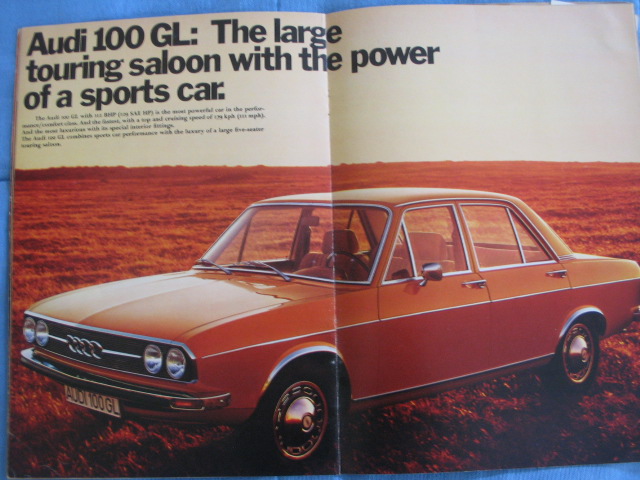
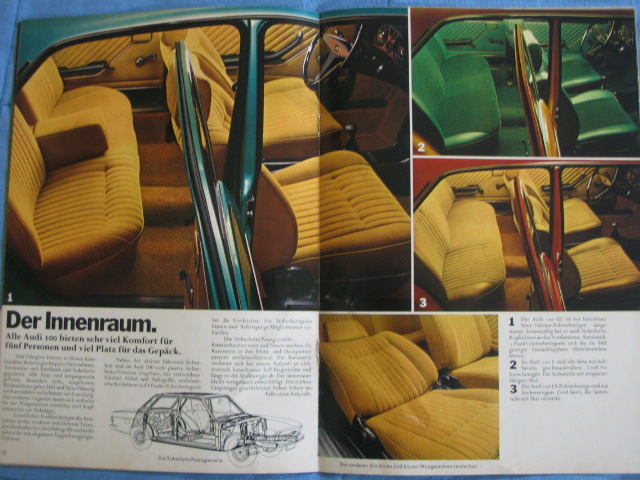
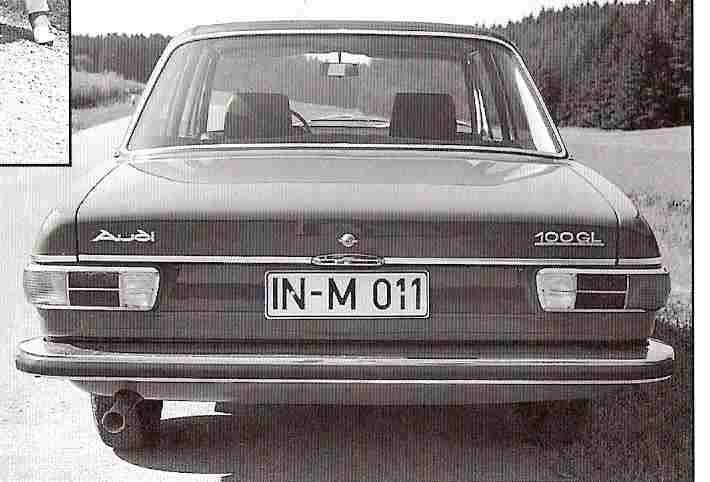
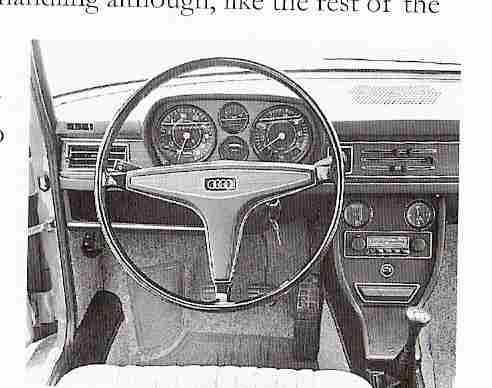
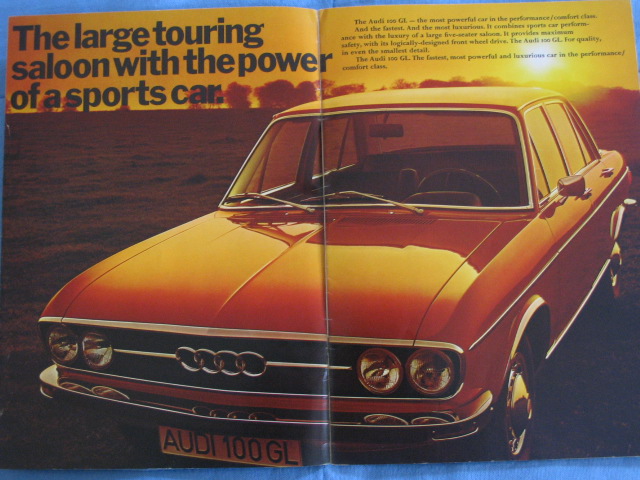
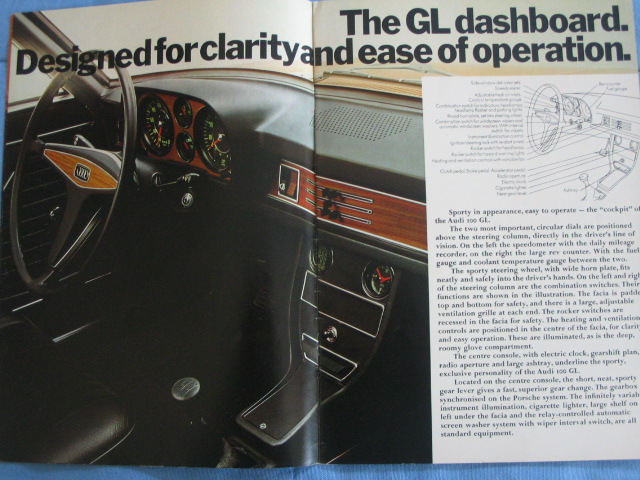
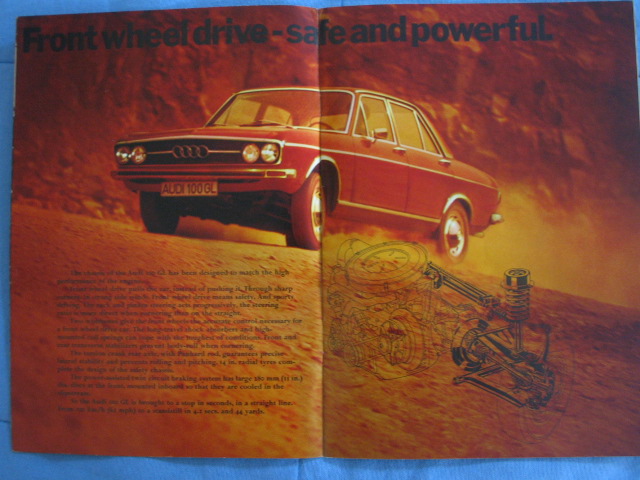
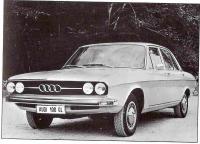
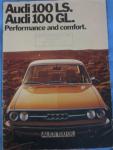
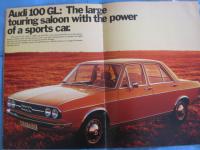
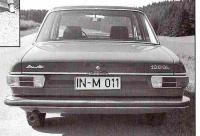
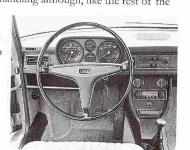
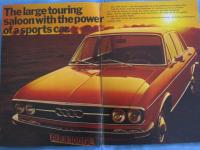
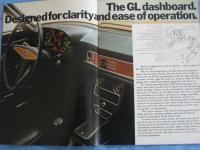
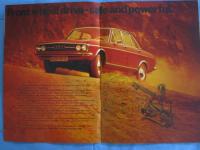
AUDI 100 GL 112hp 1971 Audi had been carefully building its 100 range, keeping the title GL for the most powerful. Engine capacity remained at 1871 cc, but with raised compression ratio and a twin-choke Solex carburettor, it was steadily improved and refined with a small increase in torque. As with the rest of the range, the GL remained with a four-speed gearbox, with a three-speed automatic among the listed extras. It also kept the disc front, drum rear brake arrangement, backed by a vacuum servo. Power steering however was not available. Wider section tyres helped the handling although, like the rest of the 100 range, it tended towards heavy understeer when pushed too hard through corners. As the top model in the 100 range, the GL featured the four headlamp grille. BODY 2/4 door saloon; 5 seats; weight 1100kg (2420lb). ENGINE 4 cylinders, in line; front; 84.0x84.4mm, 1871cc; compr 10.0:1; 84kW (112bhp) @ 5600rpm; 44.9kW /1 (60.0bhp/l); 160Nm (16.3mkp) @ 3500rpm. ENGINE STRUCTURE Ohv; 2 valves per cylinder; 1 chain driven side camshaft; aluminium cylinder head; cast iron block; 5 bearing crankshaft; Solex 32/35TDID carburettor. TRANSMISSION Front wheel drive; 4 speed gearbox; hypoid bevel final drive, 3.70; 3 speed automatic option. CHASSIS DETAILS Steel unitary construction; independent front suspension, wishbones, coil springs; rear suspension, dead axle, trailing arms, Panhard rod, coil springs; anti-roll bars front and rear; telescopic dampers; disc fron I, drums rear; dual circuits; vacuum servo power assistance; rack and pinion steering; 58.01 (12.8 Iml' gal) (15.3 US gal) fuel tank; 175/70SR14 tyres, 5.0in rim width. DIMENSIONS Wheelbase 267.5cm (105.3in), front track 142.0cm (55.9in), rear track 142.5cm (56.1in), ground clearance 19.5cm (7.7in), turning circle 11.2m (40ft), overall length 459.0cm (180.7in), overall width 173.0cm (68.1in), overall height 142cm (55.6in). PERFORMANCE Maximum speed 1llmph (179kph), 31.4kph (19.5mph)@ 1000rpm; acceleration 0-100kph (62mph) 10.8sec; 13.1kg/kW (9.8kg/bhp); average fuel consumption 31.7mpg (8.9 l/100km). Source: The Audi File, by Eric Dymock, Dove Publishing
-
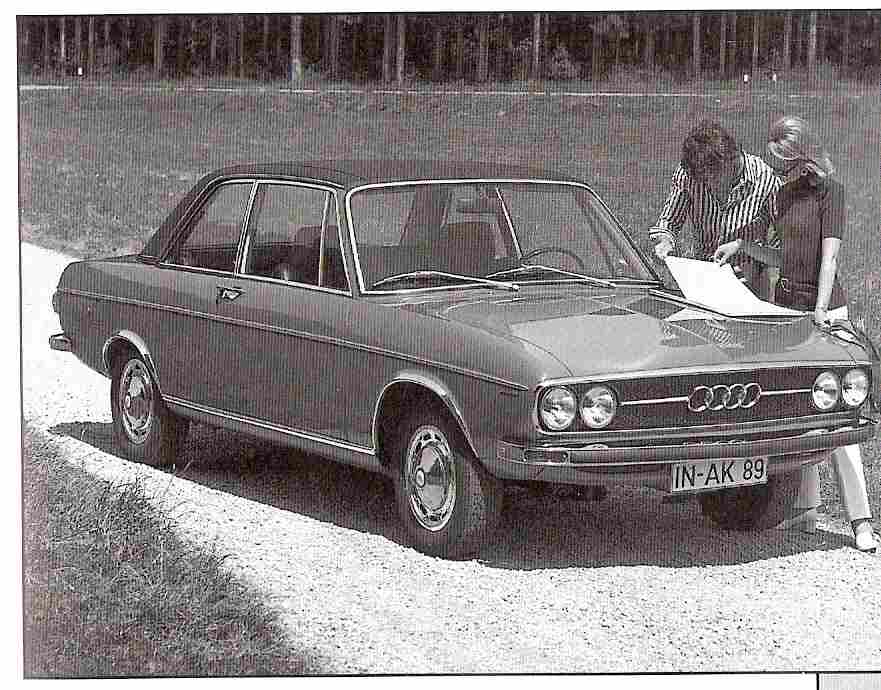
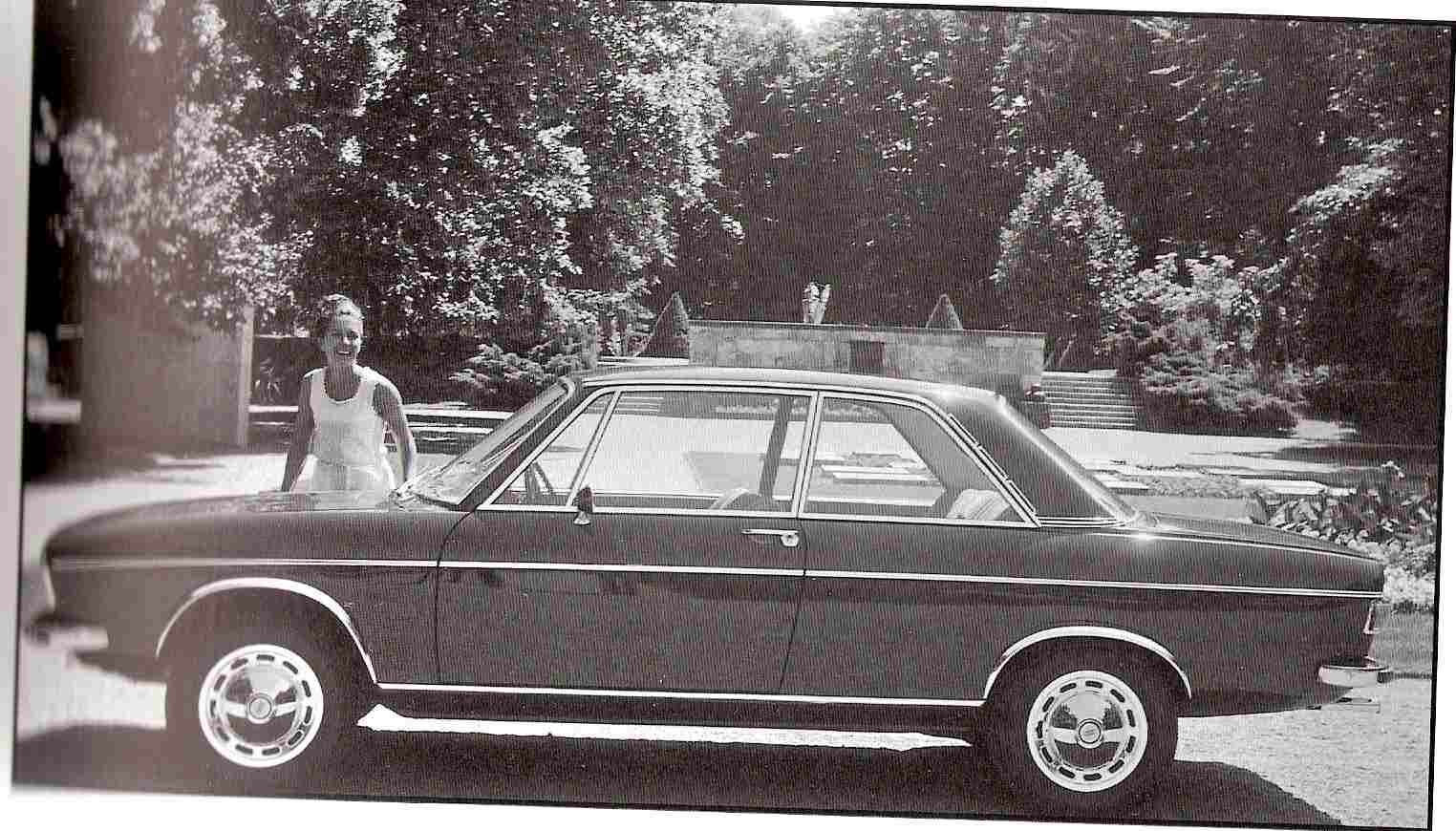
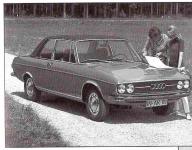
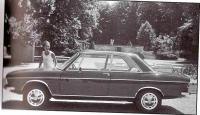
AUDI 100 2-door 1971 At this period in the late 1960s, several European manufacturers, including Jaguar and Audi, produced two-door versions of their conventional four-door saloons, aimed at drivers more concerned with style than with room for a whole family. The two-door design, with fewer vertical shut lines along the sides helped make a car look longer and lower. New dies were needed for the door and side panel pressings, as well as different glazing for door and quarter windows. This added to production costs and complications, and it was a short-lived fashion. Audis were starting to earn the plaudits of the press. "Few cars can have improved so much from what appeared to be just a body change" enthused The Motor in 1971. The 100GL two door was reckoned better value at GBP1899 than the fastback Coupe which cost 500 more. Rear seat accommodation .was superior and rearwards visibility better. BODY 2 door saloon; 5 seats; weight 1100kg (2425Ib). ENGINE 4 cylinders, in line; front; 84.0x84.4mm, 1871cc; compr 10:1; 83.5kW (112bhp) @ 5600rpm; 46.8kW 1I (59.8bhp/l); 160Nm (16.3mkp) @ 3500rpm. ENGINE STRUCTURE Ohv; 2 valves per cylinder; 1 chain driven side camshaft; aluminium alloy cylinder head; cast iron block; 5 bearing crankshaft; Solex 32/35TDID carburettor; water cooled. TRANSMISSION Front wheel drive; 4 speed gearbox, spiral bevel final drive, 4.111. CHASSIS DETAILS Steel unitary construction; independent front suspension, wishbones, coils; rear suspension, dead axle, trailing arms, Panhard rod, coils; anti-roll bars front and rear; telescopic dampers. disc front, drum rear; dual braking circuits; rack and pinion steering; 58.01 (12.8 Imp gal) (15.3 US gal) fuel tank; 165SR14 tyres, 4.5in rim width. DIMENSIONS Wheelbase 267.5cm (105.3in), front track 142.0cm (55.9in), rear track 142.5cm (56.1 in), ground clearance19.5cm (7.7in), turning circle 11.2m (40.0ft), overall length 459.0cm (180.7in), overall width 173.0cm (68.1in), overall height 142cm (55.6in). PERFORMANCE Maximum speed 106mph (170kph), 28.3kph (17.6mph) @ 1000rpm; acceleration 0-100kph (62mph) 11.9; 13.9kg/ kW (10.5kg/bhp); average fuel consumption 30.5mpg (8.6 1/ 100km). Source: The Audi File, by Eric Dymock, Dove Publishing
-
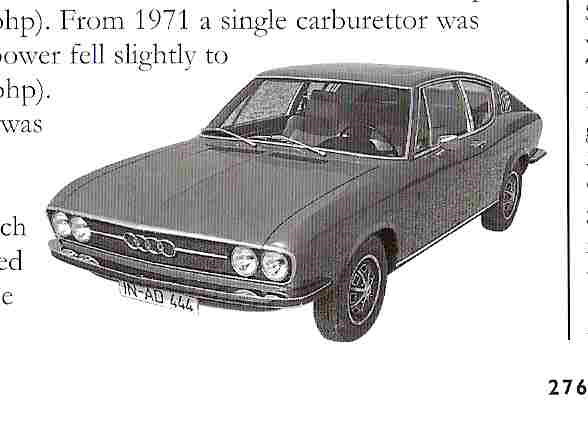
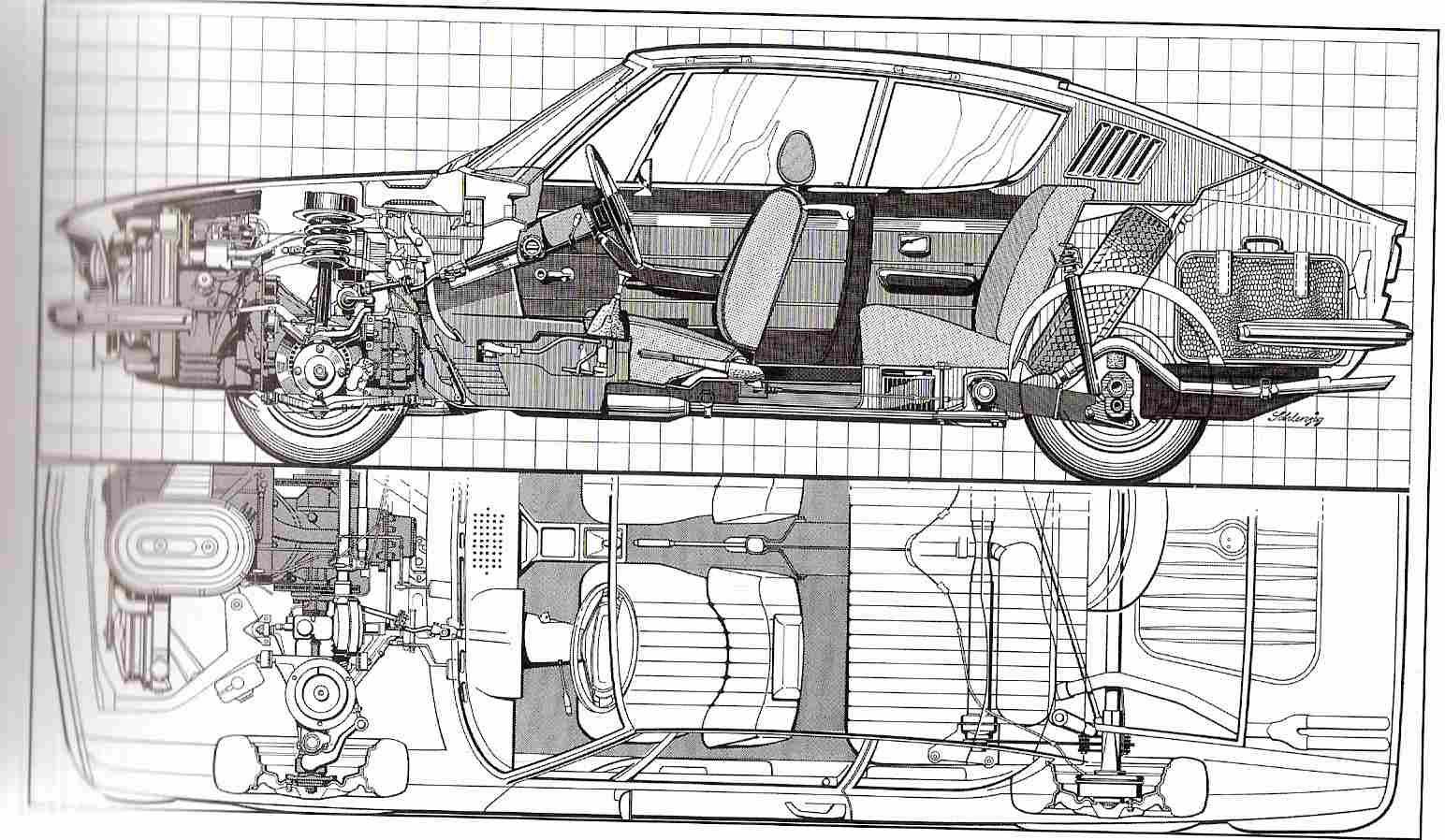
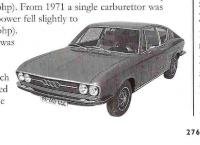
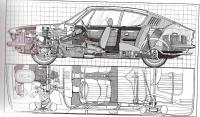
AUDI 100 Coupe S 1969 Audi's new handsome Coupe was a radical break from anything previously seen. The fastback design, which had a conventional boot rather than a more practical hatchback tailgate, was reinforced by the five 'shark gill' vents on the rear quarters. The Coupe's body was identical to the saloon's from the A-pillar forward, but the wheelbase was 11.5cm shorter, giving more agile handling - and rather less space for rear seat passengers. The four headlamp grille layout was the same as that on the top-of-the-range 100 saloons. It was only made with the 1.9 engine. Early models had two twin-choke carburettors and developed 84kW (115bhp). From 1971 a single carburettor was fitted, and power fell slightly to 82kW (112bhp). Production was limited, so that the few Coupes which have survived have become collectable. BODY Coupe; 2 doors; 4 seats; weight 1045kg (22991b). ENGINE 4 cylinders, in line; front; 84.0x84.4mm, 1871cc; compr 10.2:1; 84kW (115bhp) @ 5500rpm; 44.9kW /1 (61.5bbp/l); 159Nm (16.2mkp) @ 4000rpm. ENGINE STRUCTURE Ohv; 2 valves per cylinder; 1 chain driven side camshaft; aluminium cylinder bead; cast iron block; 5 bearing crankshaft; Solex 32/32 TDID carburettor; water cooled. TRANSMISSION Front wheel drive; 4 speed gearbox; spiral bevel final drive, 3.70. CHASSIS DETAILS Steel unitary construction; independent front suspension, wishbones, coil springs; rear suspension, dead axle, trailing arms, Panhard rod, torsion bars; anti-roll bars front and rear; telescopic dampers; inboard ventilated discs front, drums rear; dual braking circuits; vacuum servo power assistance; rack and pinion steering; 58.01 (12.8 Imp gal) (15.4 US gal) fuel tank; 185/70HT14 tyres, 5.0 rim width. DIMENSIONS Wheelbase 256.0cm (100.8in), front track 144.0cm (56.7in), rear track 144.0em (56.7in), turning circle 10.9m (36.0ft), overall length 440.0cm (173.2in), overall width 175.0cm (68.9in), overall height 133.0cm (52.4in). PERFORMANCE Maximum 115speed mpb (185kph), 33.0kph (20.4mph) @ 1000rpm; acceleration 0-100kph (62mph) 10.0sec; 12.4kg/kW (9.1kg/bhp); average fuel consumption 26.9mpg (10.5l/100km). Source: The Audi File, by Eric Dymock, Dove Publishing
-
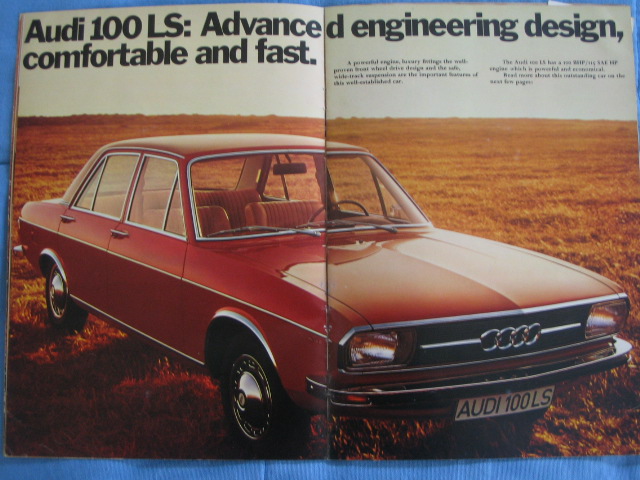
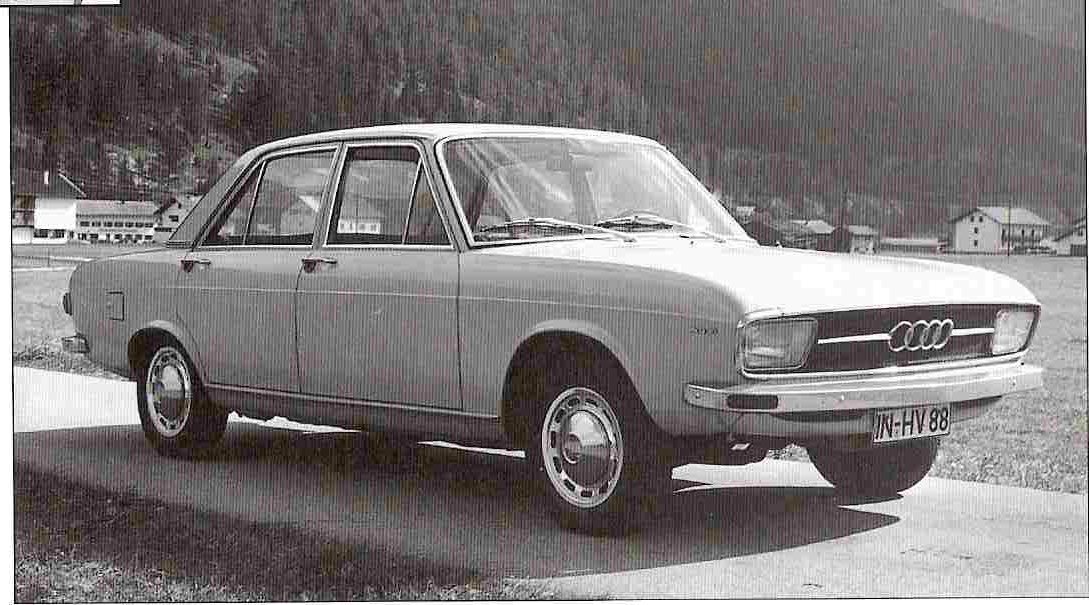
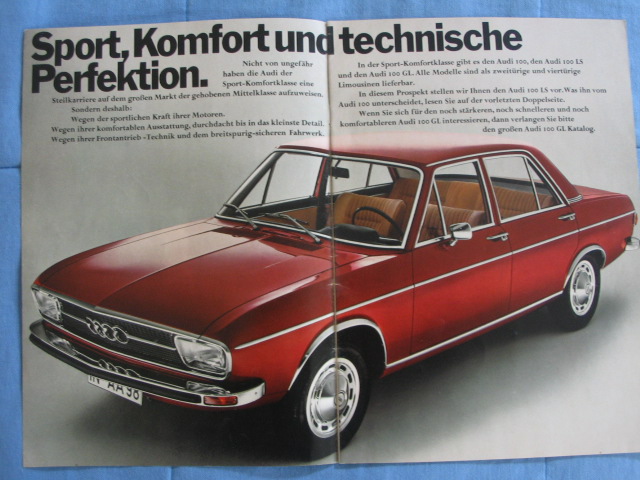
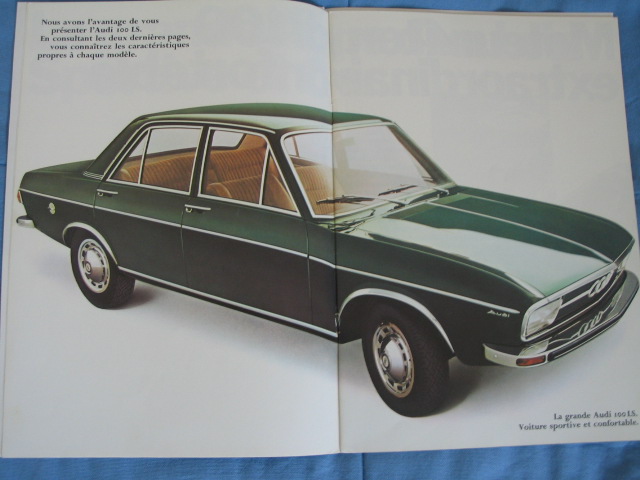
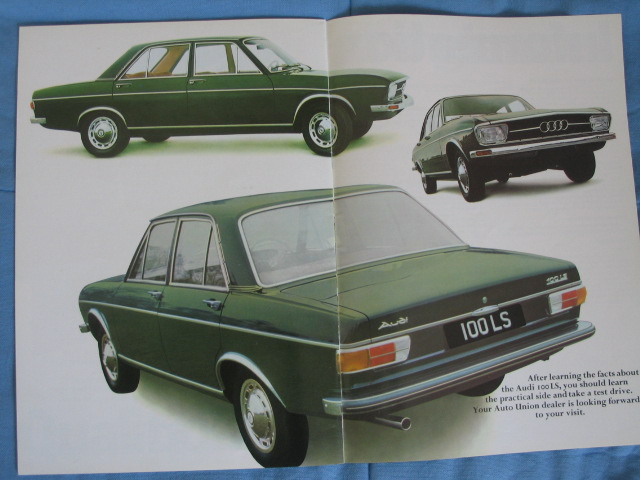
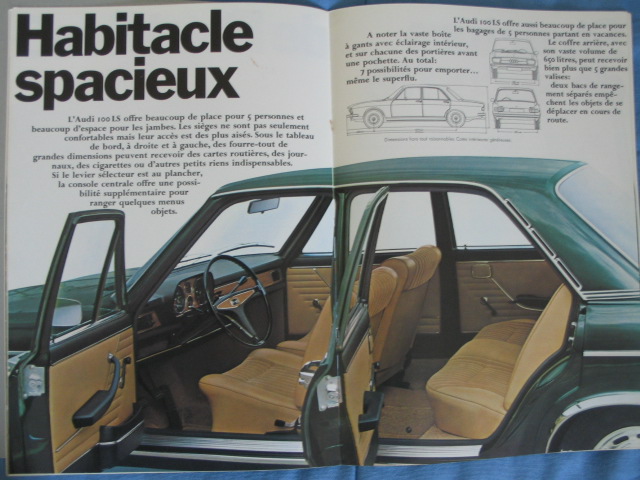
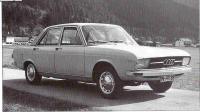
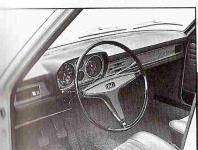
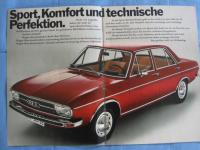
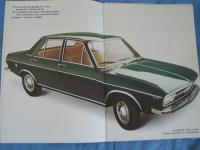
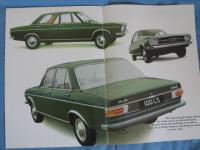
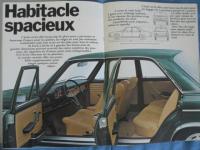
AUDI 100/100S/100LS 1968 The Audi 100 title adopted in 1968 remained a model name for 27 years. Ownership of the make passed from Daimler-Benz to Volkswagen, but the styling of the four door saloon suggested that Stuttgart had had a major part in its design. The engine was the high-swirl ohv 1760cc four cylinder unit designed by Mercedes-Benz and previously used in the Super 90. It was later enlarged to 1871cc for the 100GL and Coupe S. The four-speed gearbox was also retained, as was the forward-mounted engine. At the front there was a modified version of the wishbone suspension, and at the rear the same type of dead axle, located by trailing arms and a Panhard rod, as was used in the 60, 75 and Super 90. The 100 set out to be a car with a wide appeal in a growing sector of the new executive market. BODY 4 door saloon; 5 seats; weight 1050kg (23151b). ENGINE 4 cylinders, in line; front; 81.5x84.4mm, 1760cc; compr 9.1:1; 60kW (80bhp) @ 5000rpm; 34.0kW/l (45.5bhp/l); 135Nm (13.8mkp) @ 3000rpm. ENGINE STRUCTURE Ohv; 2 valves per cylinder; 1 chain driven side camshaft; aluminium alloy cylinder head; cast iron block; 5 bearing crankshaft; Solex 35PDSIT-5 carburettor; water cooled. TRANSMISSION Front wheel drive; 4 speed gearbox, spiral bevel final drive, 4.111. CHASSIS DETAILS Steel unitary construction; independent front suspension, wishbones, coils; rear suspension, dead axle, trailing arms, Panhard rod, torsion bars; anti-roll bars front and rear; telescopic dampers. disc front, drum rear; dual braking circuits; rack and pinion steering; 58.01 (12.8 Imp gal) (15.3 US gal) fuel tank; 165SR14in tyres, 4.5in rim width. DIMENSIONS Wheelbase 267.5cm (105.3in), front track 142.0cm (55.9in), rear track 142.5cm (56.1in), ground elearance19.5cm (7.7in), turning circle 11.2m (40.0ft), overall length 459.0cm (180.7in), overall width 173.0cm (68.1in), overall height 142cm (55.6in). PERFORMANCE Maximum speed 99mph (156kph), 28.3kph (17.6mph) @ 1000rpm; acceleration 0-100kph (62mph) 13.5sec; standing km 35.3sec; 17.5kg/kW (13.1kg/bhp); average fuel consumption 31.7mpg (8.9 1/ 100km). source: The Audi File, by Eric Dymock, Dove Publishing
-
AUDI 60 1968 In a move to expand the new model's range, Audi added a small-engined version, the 60. The DaimlerBenz designed engine kept the same 80.0mm bore, but the stroke was reduced to 74.4mm to give a capacity of 1.5 litre, and an output of just 41 kW The 60 was made as a two and four door saloon and three-door estate, but even with a lower final drive ratio performance hardly sparkled. It was a car designed very much for mainland European markets, where the annual road tax was based on engine capacity. Keeping the engine under 1.5 litre brought the 60 into a lower tax bracket. This was the last of the original Audis with theDKW F-102 inspired body design, and one of the few new Audis under 1.5 litres for nearly thirty years. BODY 2/4 door saloon, 3 door estate; 5 seats; weight 970kg (2138lb). ENGINE 4 cylinders, in line; front; 80.0x74.4mm, 1496cc; compr 9.0:1; 41kW (55bhp) @ 4750rpm; 27kW 11 (36.8bhp/1); 113Nm (11.5mkp) @ 2500rpm. ENGINE STRUCTURE Ohv; 2 valves per cylinder; 1 chain driven side camshaft; aluminium cylinder head; cast iron block; 5 bearing crankshaft; Solex 35 PDSIT-5 carburettor; water cooled. TRANSMISSION Front wheel drive; 4 speed gearbox; spiral bevel final drive, 4.1111. CHASSIS DETAILS Steel unitary construction; independent front suspension, wishbones, torsion bars; rear suspension, dead axle, trailing arms, Panhard rod, torsion bars; telescopic dampers; discs front, drums rear; single braking circuit; rack and pinion steering; 58.0 m (12.8 Imp gal) (15.3 US gal) fuel tank; 155R13 tyres, 4.5 rim width. DIMENSIONS Wheelbase 249.0cm (98.0in), front track 134.0cm (52.8in), rear track 132.5cm (52.2in), ground clearance 19.0cm (7.5in), turning circle 10.9m (3.6.0ft), overall length 438.0cm (l72.4in), overall width 163.0cm (64.1in), overall height 145.0cm (57.lin). PERFORMANCE Maximum speed 86mph (138mph), 26.0kph (16.1mph) @ 1000rpm; acceleration 0-100kph (62mph) 18.0sec; 23.7kg/kW (17.6kg/bhp); average fuel consumption 32.5mpg (8.71/100km). Source: The Audi File